
MACC Programme Day 2026: Connecting the UK’s climate adaptation community

Introduction
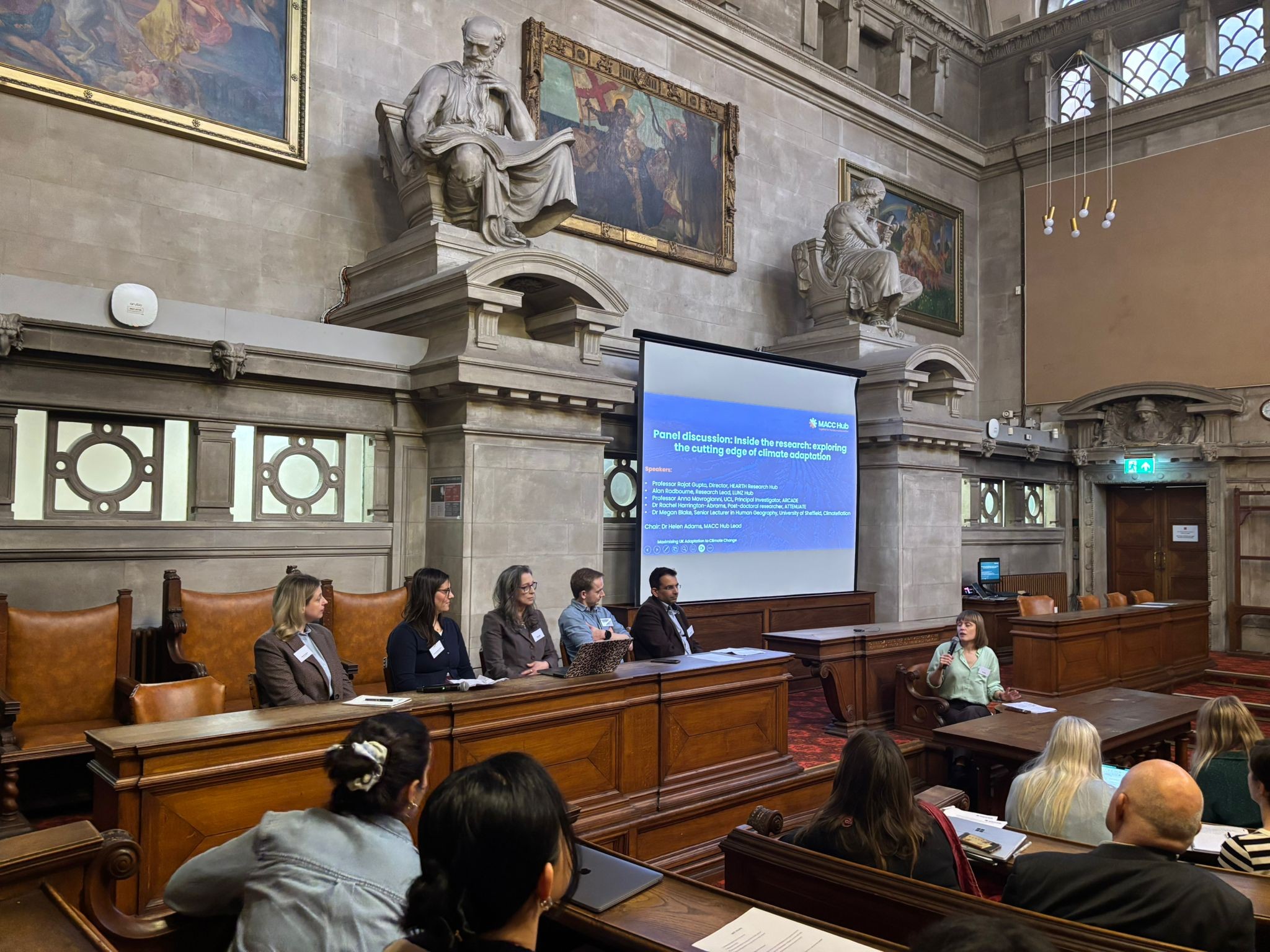
Climate change is no longer a future problem, and on 5 March 2026, 80 researchers, policymakers and practitioners gathered at Cardiff University to grapple with what that means in practice. The MACC Hub’s annual Programme Day brought the UK’s adaptation community together to share evidence, debate approaches, and ask a difficult question: are we moving fast enough?
Across the day, a few themes kept surfacing: the gap between good intentions and consistent delivery, the need for clearer ways to measure progress, and the importance of connecting research to the people and communities who need it most.
Opening the day: collaboration and delivery
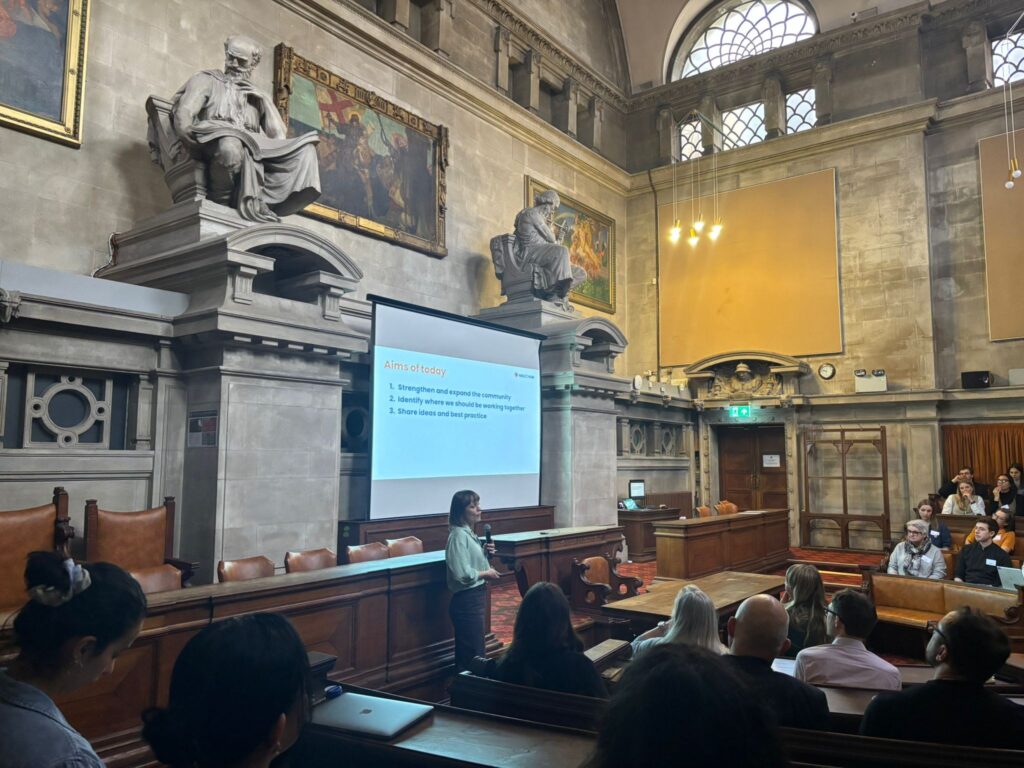
The workshop opened with a welcome from Dr Helen Adams, MACC Hub Lead, who spoke about the importance of strengthening the adaptation community, finding opportunities to work together and sharing ideas and good practice. She highlighted the need for approaches that work across different contexts and focus on people and vulnerability, as well as MACC’s role in connecting research, policy and practice.
James Searle, Head of Climate Adaptation at the Welsh Government, explained how adaptation is managed across government as a shared responsibility, with most work taking place within individual policy areas supported by a central team. He noted that while there is a lot of good early work, approaches are not yet consistent across areas, and there is a need to improve delivery and how progress is assessed. Following the Climate Change Committee’s 2023 review, a more structured way of tracking progress has been introduced, bringing together external review, internal monitoring and self-assessment. Work is ongoing to refine outcomes, develop measures, and present this information in a clearer way to support decision-making, along with steps to strengthen governance, address gaps in evidence, and support a new Climate Adaptation Expert Forum.
Colleen Cluett, Sustainable Development Advisor at the Office of the Future Generations Commissioner, spoke about the Well-being of Future Generations (Wales) Act and its relevance to climate adaptation. She emphasised that major challenges cannot be tackled in isolation and highlighted the importance of long-term thinking and considering the impact of today’s decisions on future generations. She explained how the Act supports Wales’ approach to sustainable development through national well-being goals such as a “prosperous Wales” and a “resilient Wales” and requires public bodies to set and act on well-being objectives. With 56 public bodies and 13 Public Services Boards involved, organisations are expected to assess well-being locally and work in line with the “five ways of working” to support more joined-up, long-term decision-making.
We then heard from Dr Clive Walmsley, Senior Specialist Advisor at Natural Resources Wales and Chair of the Local Government Climate Strategy Panel (CSP) Adaptation Sub-Group, who described how the CSP supports coordination of climate action across local government in Wales. Established in 2020, the CSP brings together five sub-groups covering adaptation and decarbonisation, helping align activity, share learning, and report to the Partnership Council for Wales. He explained that the Adaptation Sub-Group, set up in 2024, supports local authorities in putting climate adaptation into practice by identifying gaps, challenges and opportunities, and helping to avoid duplication and speed up progress. It brings together partners from across government and related organisations, with a focus on improving collaboration, building resilience in communities and services, and ensuring climate risks are considered in leadership and decision-making.
What needs to change: shaping the next National Adaptation Plan
Next up we had Natalie Roberts, Policy Lead for Objectives Development: Land, Sea and Food Systems at the Department for Environment, Food and Rural Affairs, outlining some steps ahead for the 4th National Adaptation plan and highlighting that strengthening adaptation objectives is both urgent and essential.
She noted the role of objectives in preparing the country for more extreme weather, including the possibility of around 4°C of warming by the end of the century. Objective setting within the government is focusing on setting a clear long-term direction, supported by interim milestones and five-yearly targets, along with system-level and sub-system objectives (following the approach of the CCRA) and delivery plans to guide progress through NAP4.
Building on Natalie’s presentation, Suzannah Sherman, Research and Policy manager, MACC Hub, described the MACC Hub’s work to support adaptation objective setting (MOSS). This work is a government-facing service designed to help teams develop adaptation objectives using evidence and practical tools. This includes working directly with departments across several key areas such as the built environment, food security, land, sea and culture. Stakeholder roundtables, and rapid reviews of the academic literature reviews fed into the process. The work is organised into four strands focusing on understanding impacts, building long-term visions of good adaptation, aligning objectives with wider government priorities, and supporting decision-making processes under uncertainty. Outputs, due in March 2026, will include policy briefs, guidance materials, visual summaries and other tools designed to help scope robust adaptation objectives across government.
Taking the floor next was Kate Jones, summarising the key findings from her research as part of MACC’s Policy Response Unit. Kate’s research looked at what the UK can learn from other countries in adapting their food systems to climate change. The research focused on case studies from Aotearoa New Zealand, Japan and Chile, chosen for their different approaches to governance, policy and food system resilience, as well as their relevance to the UK context.
The findings suggest that while awareness of climate risks to food systems is growing, most adaptation efforts still focus on production, with less attention on wider system resilience. Evidence on what works is limited, and governance can be fragmented, with gaps between consultation and policy change. The study highlighted the importance of involving supply chain actors, considering impacts across different scales, and combining different approaches such as nature-based and technology-led solutions, alongside stronger coordination, better measurement of outcomes, and tools that support decision-making in practice.
Adaptation in action: MACC awarded projects
After a short break, attendees returned to a lively session bringing together a wide range of MACC-funded projects from across all four nations, providing an opportunity to hear directly from project teams about their plans.
A common thread across the session was the emphasis on collaboration and impact. Projects highlighted the importance of partnerships, interactive approaches and clear pathways to delivering real-world change. For many teams, this was their first opportunity to present to external stakeholders, making it a valuable moment to test ideas, spark discussion and build connections beyond their immediate project networks. Crucially, these projects also offered tangible examples of what transformational adaptation looks like in practice—from co-designing climate solutions with people with learning disabilities in Anglesey, to integrating food justice and mental wellbeing through community-led initiatives in London, and reimagining climate-resilient school environments through youth-led, creative approaches.
Further information on all MACC funded projects, including summaries of each project, is available here.
Met Office: Collaborative delivery
The afternoon continued with a session on collaboration between the MACC Hub and the Met Office, where Laura Dawkins, expert scientist from Met Office highlighted how climate science and services are being used to support adaptation across the programme. The Met Office is contributing through four work packages, providing expertise to help translate evidence into practical insights, support the MACC Programme-funded research projects, fill gaps in climate information and improve how climate data is used in decision-making. This includes working across MACC projects, supporting stakeholder engagement and helping ensure consistent use of climate information.
Work is currently focused across several key strands:
- Supporting MACC research projects with data and analysis
Providing scientific input, datasets and analytical support to help project teams strengthen their research and ensure robust use of climate information.
- Cascading risks and co-production workstream
Exploring how climate risks interact and cascade across systems, and working with stakeholders to co-develop approaches that better reflect real-world complexity in decision-making.
- Development of climate information approaches and risk tools
Improving how climate information is communicated and applied, including scenario-based approaches and “storylines” to help users understand potential impacts in a more accessible and decision-relevant way.
- Working with the MACC Hub
Supporting coordination across the programme, strengthening links between projects, and helping ensure consistent and effective use of climate science and information.
Together, these strands demonstrate how the Met Office is embedding climate science directly into applied adaptation research, supporting more integrated, usable and decision-focused outputs across MACC.
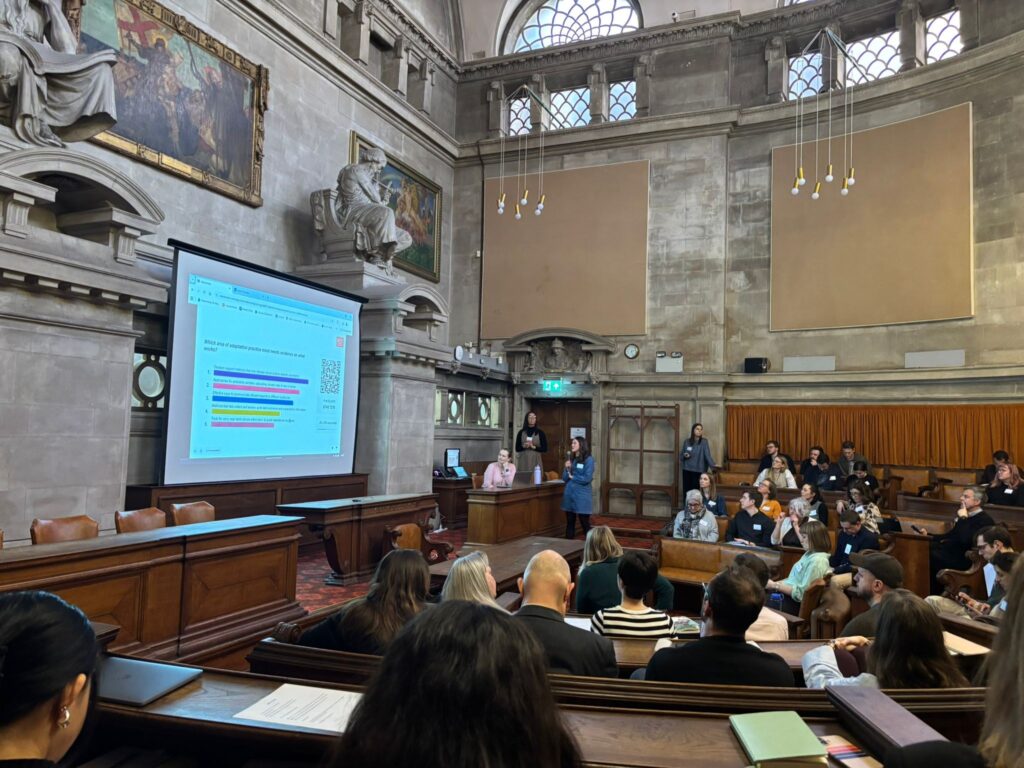
The session showcased a range of work underway, from developing more flexible and accessible climate data for modelling and analysis, to creating tools and approaches that help stakeholders understand and plan for complex climate risks. A particular focus is on improving how climate information is communicated, including the use of “storylines” and scenario-based approaches to make potential impacts clearer and more relevant to users. Work is also exploring how to better assess combined risks (such as heat, flooding and air quality together) and how to support place-based decision-making, for example by assessing how different adaptation options could reduce risks in buildings like schools. Together, this work aims to strengthen how climate science is applied in practice, supporting more informed and resilient decisions across sectors and scales.
Inside the research: exploring the cutting edge of climate adaptation
The day concluded with a panel discussion chaired by Dr Helen Adams, bringing together researchers working across a range of climate adaptation projects and initiatives. The panel featured Professor Rajat Gupta (HEARTH Research Hub, Oxford Brookes University), Alan Radbourne (LUNZ Hub, Loughborough University), Professor Anna Mavrogianni (ARCADE, UCL), Dr Rachel Harrington-Abrams (ATTENUATE, London School of Economics,) and Dr Megan Blake (Climateflation, University of Sheffield).
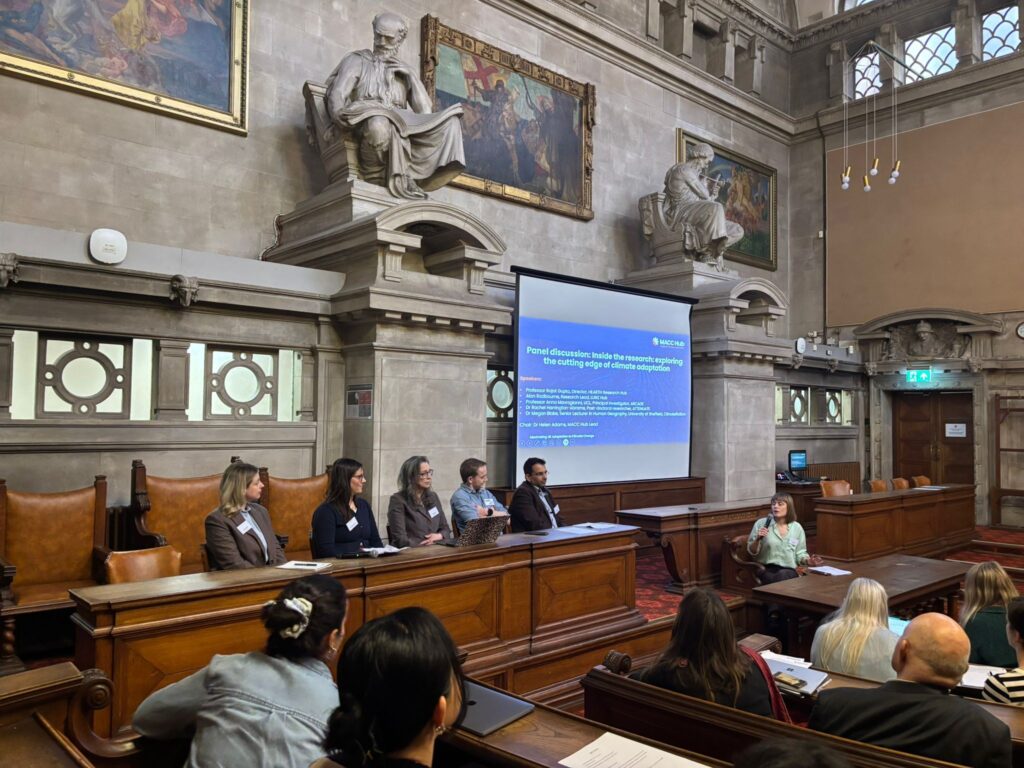
The discussion explored what is currently at the cutting edge of climate adaptation research and how different approaches are helping to address complex, system-wide challenges when it comes to adaptation. Panel members reflected on the importance of interdisciplinary work, the role of evidence in informing decisions, and the need to connect research more closely with real-world policy and practice. The session also highlighted the value of collaboration across projects and disciplines, as well as the importance of translating research into insights that can support action on the ground.
This conversation its within a wider group of large, collaborative research initiatives, including HEARTH and the LUNZ Hub, alongside MACC. While each programme is distinct, they share a similar way of working: bringing together different organisations and disciplines to tackle complex climate and environmental challenges. HEARTH focuses on the links between extreme heat, health and net zero transitions, particularly for vulnerable communities, while the LUNZ Hub brings together over 30 organisations to build and share evidence on land use, nature and climate resilience. Together, these programmes reflect a broader move towards more joined-up, practical research that is designed to support real-world decision-making.
“The evidence is there. The challenge now is making sure it reaches the right people at the right time.” – Panel discussion, MACC Programme Day, Cardiff 2026
A big thank you to everyone who attended and contributed to making the day such a valuable and engaging discussion, and to our Wales Spoke for organising the event. To stay up to date with MACC Hub activities, you can sign up to our newsletter.
Have research, projects or ideas related to climate adaptation that you would like to share? Please submit them directly to our Knowledge Portal.
Further resources



MACC Hub: Awarded Projects

MACC Hub Webinar Series

Comments
There is no contentYou must be logged in to reply.