Three Horizons Toolkit

Summary
It is a framework that helps people to think and plan for the longer term rather than being so stuck in the here and now that they miss opportunities, don’t spot risks or make decisions that don’t stand the test of time.
Introduction
The model is essentially a graph that looks at how ‘dominant’ a way of working is and how that might change over time.
Horizon 1: Horizon 1 is the most dominant way of doing things right now – the current situation. The model assumes that this way of working cannot last. That the cracks are showing, that things will move on and it needs to adapt, or that it is already failing. The model shows this way of working declining over time, although there may be some bits of this old way of doing things that are worth keeping in the future.
Horizon 2: Horizon 2 are the innovations that help make the shift from Horizon 1 to Horizon 3. There are always new ideas and ways of doing things being tested out. Sometimes these are just small experiments but sometimes, for a while, they can become the most common way of working.
Horizon 3: Horizon 3 is the way we want things to work in the future. This is the vision. It may be that pockets of this way of working are already happening on the fringes. The model shows how, over time, this becomes the new normal and almost everyone will be working this way. Eventually, though, it may also become the new Horizon 1 – the chances are things won’t stand still and the best way of doing things will need to adapt and change.
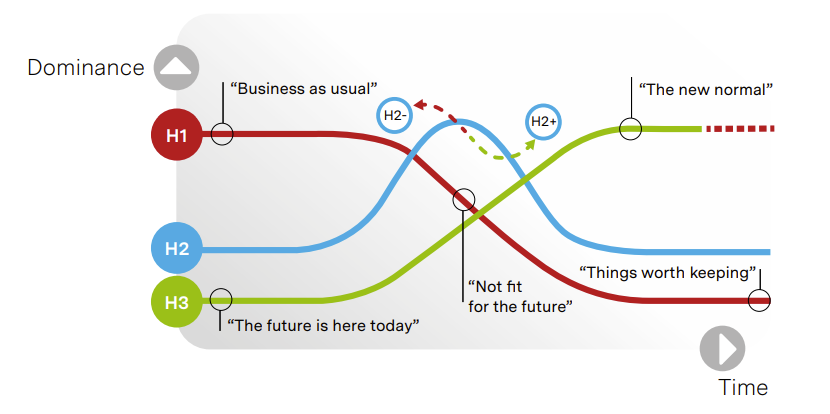
Three Horizons graph, Source: The Three Horizons Toolkit
Who is this for?
Anyone who is involved in making decisions that need to consider the future and future generations, like
public bodies in Wales with duties under the Well-being of Future Generations Act.
Why would you use it?
To think about how and why the way things are currently done is not fit for purpose, in what ways emerging trends might shape the future, what an ideal future should look like and the kinds of visionary
actions that are needed to get closer to that future.
What do you need?
The model is straightforward and intuitive. You can work alone or with a group. You can use this technique if you are short on time and have a shoestring budget, or you can use it for more in-depth discussions and workshops.
Further resources
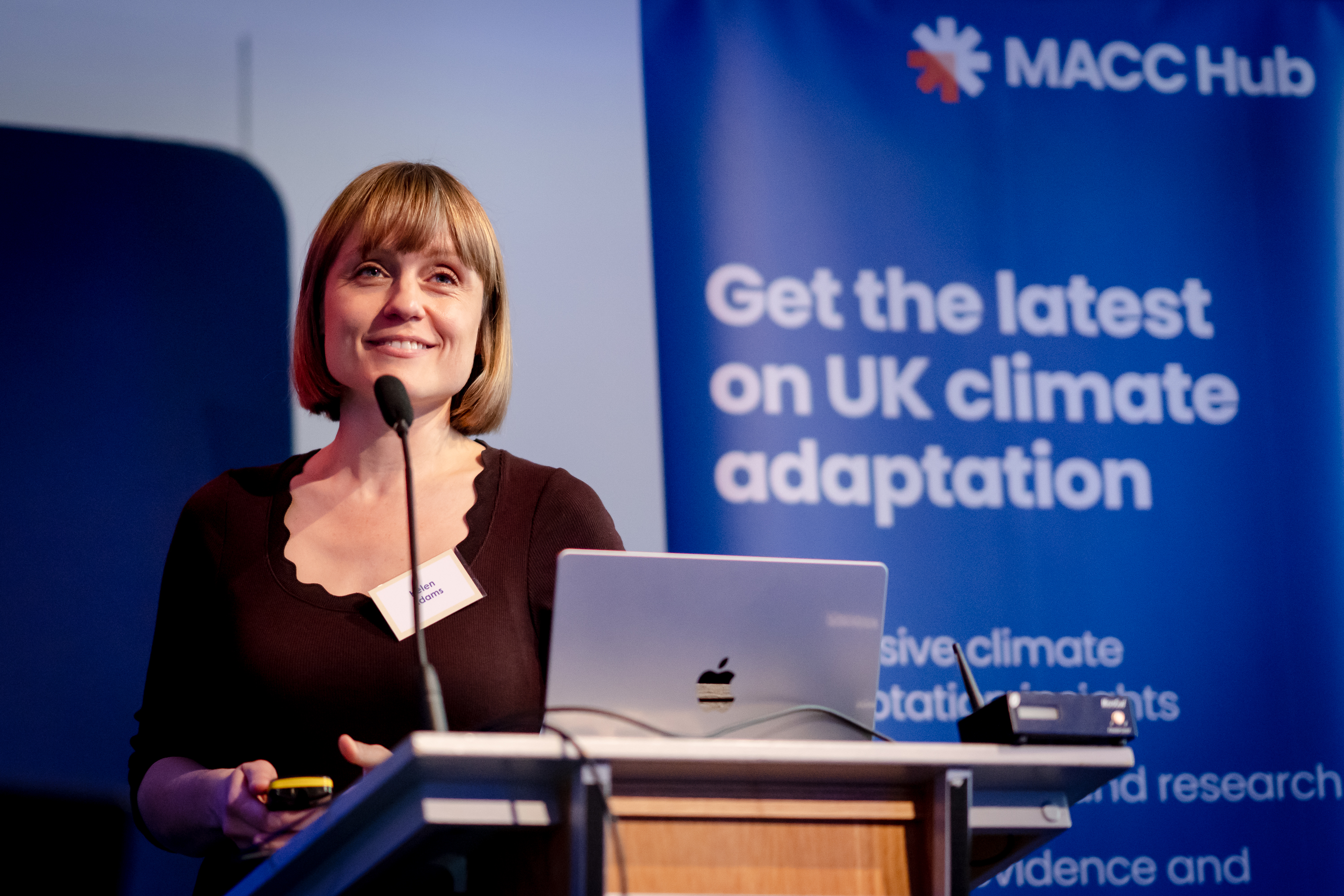

MACC Hub Annual Conference 2025: highlights, insights and next steps

The Halfway Mark for Adaptation at COP30

Comments
There is no contentYou must be logged in to reply.