

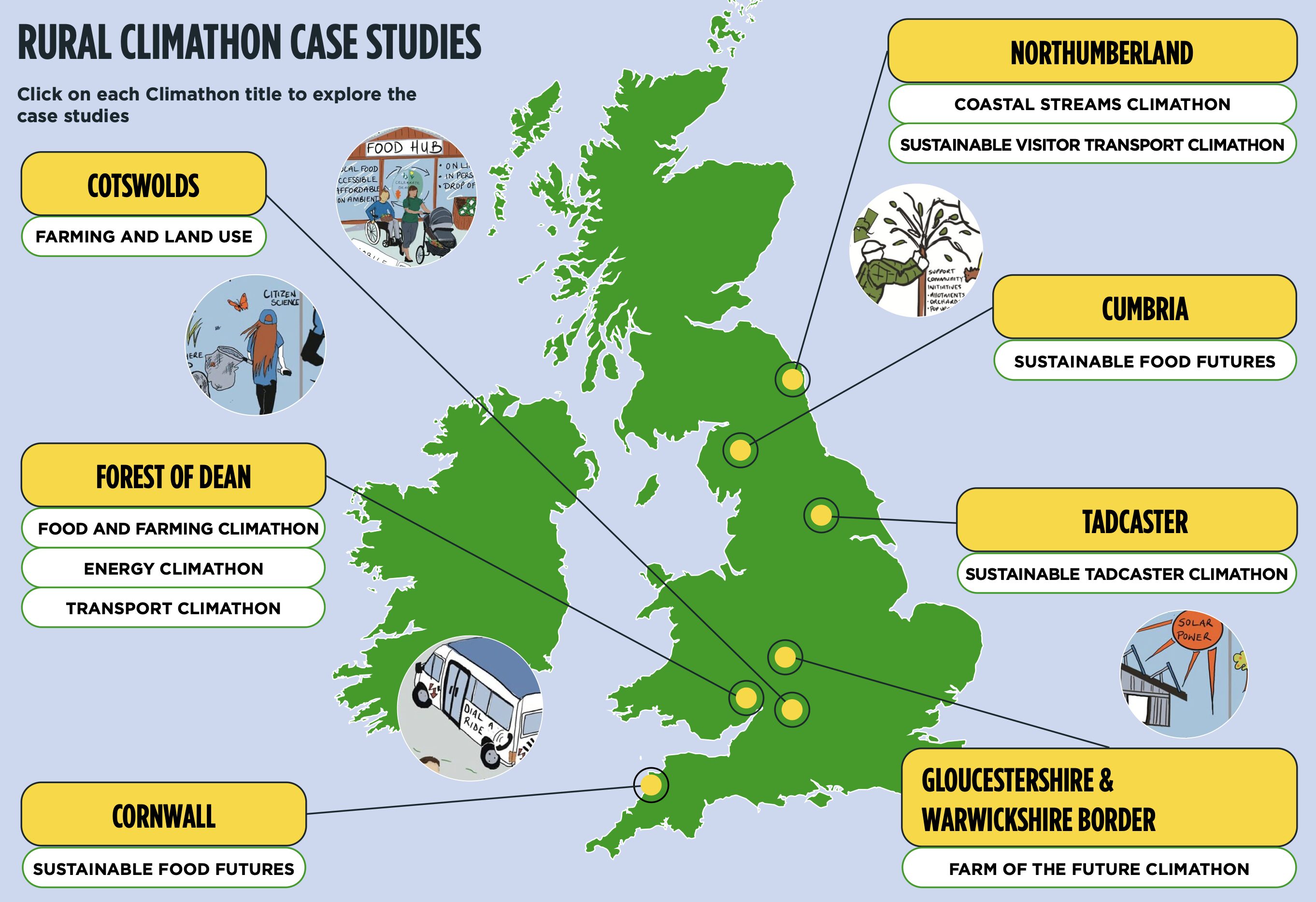
Summary
Communities across the world have recognised that urgent action to respond to the climate crisis is now a top priority. Indeed, according to a recent study in Nature, nine out of ten people worldwide want to see intensified political action to address climate change. In the UK, the overwhelming majority of councils at local government level have now declared a climate emergency.
Climathons work on addressing the global challenge at a local level, across a range of sectors including transport, energy, and food and land use. The events focus attention on practical solutions to local challenges in an inspiring and engaging way that brings people together to spark action. Climathons can also improve local outcomes for biodiversity, tourism, housing, energy, and health – helping communities and the natural environment to flourish.
Introduction
Climathons bring communities together to take practical local action to tackle the climate crisis. At Climathon events, different people from across a community discuss climate challenges and potential local solutions, and agree on practical actions they will take together.
These events work because they connect and inspire communities, encouraging citizens, business leaders, subject specialists, local knowledge holders, and decision-makers to work collaboratively. Communities not only envision a climate-resilient future together but agree on climate-positive plans to bring that future to life. By hosting a Climathon, you can join a global movement of people working locally to accelerate our transition to a low-carbon, climate-resilient society.
What is the toolkit for?
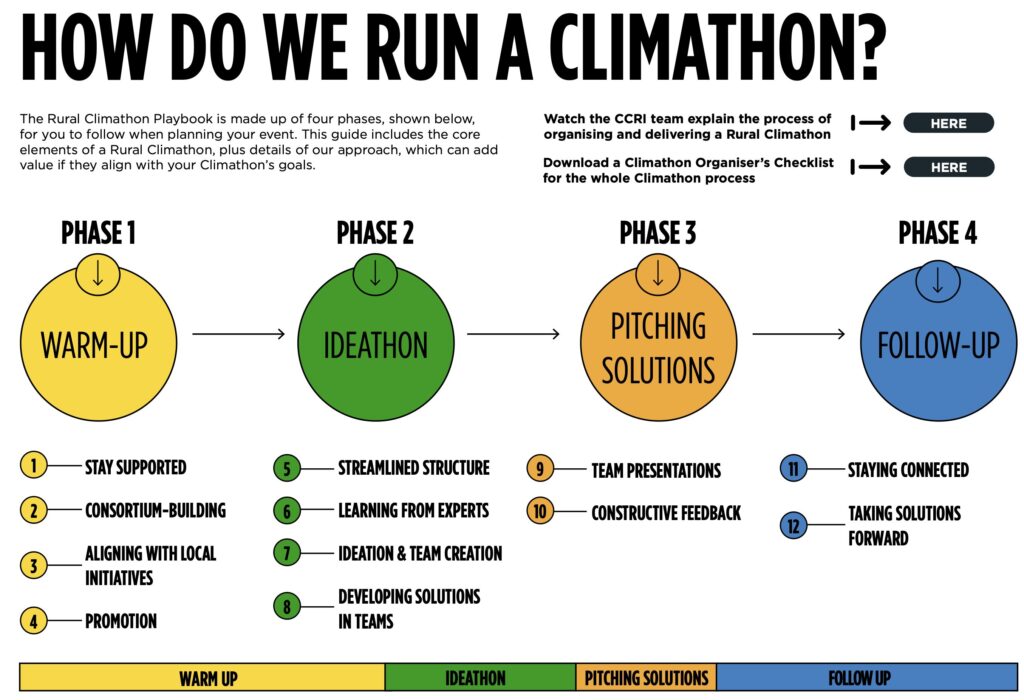
The Rural Climathon Playbook is made up of four phases, shown below, to support planning your event. The guide includes the core elements of a Rural Climathon, plus details of our approach, which can add value if they align with your Climathon’s goals.
Who is the toolkit for?
This toolkit is for people in rural communities who are wanting to work together to tackle a local climate-related challenge. Potential participants include:
- Local councils and public sector bodies
- Charities and voluntary sector•
- Local knowledge holders and subject matter specialists
- Entrepreneurs with an interest in climate innovations•
- Businesses with an interest in investing in climate solutions
- Local education providers
- Local climate action groups
- Local community groups / citizens
Examples of challenges that previous Climathon organisers worked on:
- How might we collaborate to reduce waste, promote circularity, and enhance connections within the Forest of Dean’s food system?
- How might local businesses, community groups, and organisations work together to make Tadcaster more economically, ecologically, and socially resilient to the impacts of climate change?
- How might we improve the offer and uptake of inclusive, sustainable visitor transport to leisure destinations in the North East?
Climathons were originally designed as 24-hour events for cities. Rural Climathons adapt the original method to better suit the needs of rural communities by:
- Improving accessibility of and inclusivity of events to enable wider participation
- Focusing on collaboration through using deliberative methods and consortium building to enable diverse viewpoints to be heard
- Streamlining event structures to support engagement and teamwork
- Aligning with existing local initiatives to maximise potential for a long-term positive impact
Citation
CCRI (2025) The Rural Climathon Toolkit (2025). A step-by-step guide for bringing your community together to take local climate action.
The Rural Climathon Toolkit was funded by the British Academy and UKRI. It was developed by the Countryside and Community Research Institute (CCRI) in collaboration with the National Innovation Centre for Rural Enterprise (NICRE).
The global Climathon movement is led by Climate KIC, there is more information about Climathon events here.
Related resources
Simmonds, P., Maye, D., Ingram, J., Gardner, A. S., & Raseta, S. (2025).“Deliberative approaches to the climate crisis: Adapting Climathons for rural communities”. Area, 57(2), e12994. doi:10.1111/area.12994.
Find more about the toolkit launched in November 2025 from the CCRI website – New Toolkit helps turn rural climate ambitions into community-driven action
Transformational Adaptation Themes
The toolkit helps with …
Active engagement
Lasting change depends on genuine collaboration with communities. This pillar is about working together over time, recognising that emotions and values shape how people see risk, and building a shared vision for the future of each place.
Systems thinking
This pillar is about looking at the bigger picture – how different sectors, places, and people are connected – and making sure actions in one area don’t cause problems in another. It means working across boundaries, creating benefits for people and nature, and being fair about who carries the costs.
Comments
There is no contentYou must be logged in to reply.