
Tackling Heat Risk in London: Turning Insight into Action

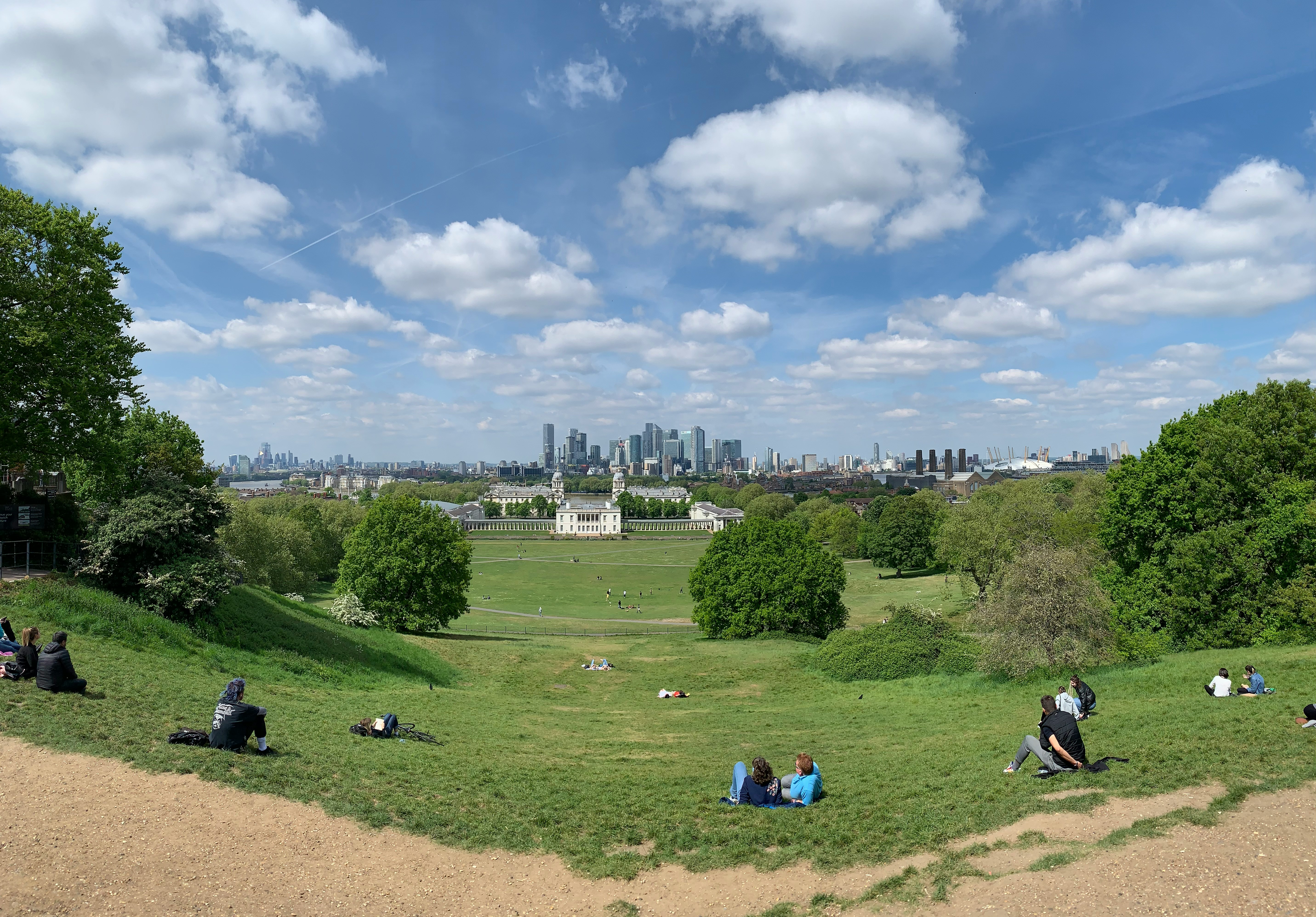
This is a post-event reflection of the London Climate Ready Partnership (LCRP) Forum 2026 held at the City Hall, London in collaboration with the MACC Hub.
On 27th February, the London Climate Ready Partnership and the MACC Hub convened more than 100 stakeholders from across London’s public, private, academic, health, transport, and community sectors to discuss one of the capital’s most urgent adaptation challenges: extreme heat.
The message of the day was clear: What is needed is a shift, from understanding heat as a risk to delivering practical, equitable, systemwide adaptation to heat in London.
London’s heat risk
London is already experiencing hotter summers, more frequent extreme heat days, and intensifying pressure on the systems that keep the city functioning.
Public concern is also rising. The Mayor’s Talk London campaign engaged 3,522 residents, revealing strong calls for more green and blue space and clearer action to protect vulnerable groups. The London Climate Resilience Review recommended a strategic plan for heat, and London has since joined the C40 Cool Cities Accelerator, joining 32 cities committed to strengthening heat resilience.
The evidence paints a stark picture:
- Londoners aged 45–65 face nearly double the heat‑related mortality risk compared with the rest of England.
- Homeless individuals are 35% more likely to be hospitalised at 25°C than at 6°C.
- Cardiovascular deaths rise 2% for every 1°C increase in temperature.
- Suicide risk increases with each 1°C rise in average temperature.
These impacts fall hardest on those least able to adapt therefore deepening existing inequalities.
Setting the Scene: Keynotes and Evidence Bursts
Opening remarks by Helen Adams (MACC Hub, KCL) and Bob Ward (LCRP Chair, LSE Grantham Institute) framed the day around a central question: how can London move from incremental action to transformational adaptation?
Transformational adaptation in practice
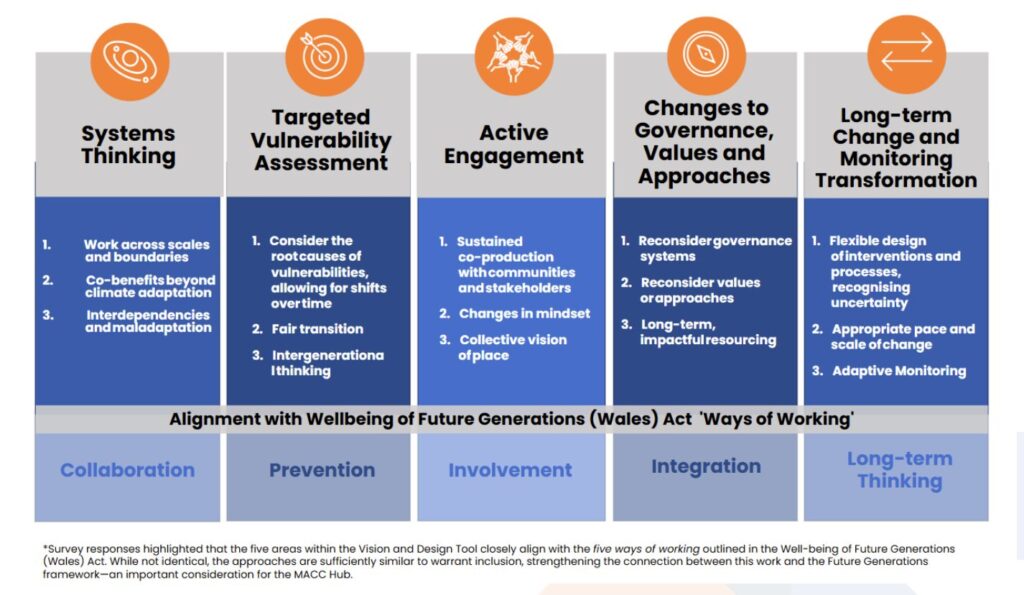
Stephen Jones (Climate Northern Ireland and MACC Hub Northern Ireland spoke lead) shared one of the findings, vision and design framework (see below), highlighting the importance of systems thinking, governance shifts, and working across interdependencies.
The London Heat Risk Plan
Agathe de Canson (London Councils) outlined the emerging London Heat Risk Plan, being developed by London Councils and the Greater London Authority. London currently has no clear lead for extreme heat at any level of government. Borough activity exists, but overall work is fragmented, often grant‑dependent, and not aligned with the scale or urgency of the risk.
The plan will focus on five sectors: built environment, health and social care, nature, infrastructure, and emergency response, supported by a prioritised investment plan and project pipeline.
Project bursts
To further ground the forum in the latest and emerging research the Anna Mavrogianni (UCL) and Rajat Gupta (Oxford Brookes) presented work on the ARCADE and HEARTH projects:
- ARCADE– maximising adaptation of overheating‑prone residential settings for heat‑vulnerable older people.
- HEARTH – identifying health co-benefits of Net Zero and reducing heat risk in underserved communities.
What we learned from London’s adaptation community
Then we turned things over to participants. We asked participants to assume a persona, each reflecting a professional working in one of the five sectors the heat risk plan will focus on, and reflect on the five pillars of MACC’s vision and design tool and. Below is a synthesis of what they shared.
1. Systems thinking: A city of interdependencies
Again and again, participants spoke to heat being a systems problem. Participants discussed how if (or when) London faces 1.5–3°C of global warming and 40–45°C heat events, the design thresholds for buildings, infrastructure, and services will need to fundamentally change. They described an urban system where:
- Heat touches everything – housing, transport, energy, communications, health
- Failures are likely to cascade – an overheated substation can become a transport disruption and then become a health emergency
- Perverse incentives persist – profits are privatised while risk is socialised
- Adaptation still sits outside business‑as‑usual functions for a lot of sectors and organisations
- Spatial inequality magnifies vulnerability
When asked what higher ambition looks like, participants imagined adaptive pathways, shared data platforms, and system level social return on investment; all grounded in the understanding that cooling, nature, and comfort deliver co-benefits far beyond heat risk alone.
2. Targeted vulnerability assessment: Looking beyond the obvious
Participants highlighted the many factors shaping vulnerability both at the individual and organisation level: tenancy, ageing building stock, health conditions, NHS fragmentation, public transport dependence, ageing demographics.
An important insight shared was that many people who are vulnerable do not identify as vulnerable. Lived realities such as dementia, neurodiversity, social isolation, and poor mental health can make standard heat messaging ineffective.
Higher ambition meant shifting from individual level vulnerability to the structural conditions that create it: housing quality, governance mismatches, transport access, urban design. It also meant strengthening community level safety nets: buddy systems, resident groups, trusted neighbourhood hubs.
3. Active engagement: Go where people already are
Participants told us that for them it wasn’t about creating new engagement structures but working with the ones that already exist.
Mosques, schools, nurseries, libraries, tenants’ associations were all considered places where people already gather, trust information, and support one another. Behaviour change messaging alone will fail without infrastructure, resources, and agency.
The shift from incremental to transformative engagement is one of coproduction, shared ownership, and community designed adaptation pathways.
4. Governance and values: The untidy truth
Governance was the most emotionally charged theme in the room. Participants repeatedly described London’s heat governance as fragmented, confusing, and unaligned. Responsibilities are scattered across councils, NHS bodies, utilities, transport operators, landlords, and voluntary organisations, with short‑term funding cycles reinforcing siloed practice.
Some were frank about the political dimensions: definitions of “acceptable risk,” including excess deaths, quietly shape decision making. Others raised concerns about maladaptation, including unregulated air conditioning uptake among those who can afford it.
Higher ambition here meant bold action: clearer mandates, shared accountability, long-term investment, stronger statutory levers, and integration of heat into political narratives about housing, health, net zero, wellbeing, and economic growth.
5. Monitoring and long-term change: Planning for extremes, not averages
Participants widely agreed that adaptation requires flexible, long-term pathways. However, many noted that London struggles with enforcement, post‑construction evaluation, and data coordination.
They called for monitoring systems that bring together: climate thresholds, infrastructure performance, service pressures, community insight alongside capital cycles, maintenance planning, and green infrastructure stewardship.
The ambition is a city that learns, before, during, and after heat events, and adjusts accordingly.
A shared vision for a heat resilient London
Across discussion, five features of a heat-adapted London emerged:
- Equity: resources flow first to those at greatest risk
- Design that enables liveability: cool homes, shade, nature, accessible public space
- Community power: existing networks that are enabled and not bypassed
- Collaborative governance: clear roles, aligned mandates, sustained funding
- Data informed practices: consistent assessment, evidence, real-time insights
Imagining London’s future: Three scenarios
Participants then used the MACC Hub’s vision and design framework (see above) to imagine three plausible futures.:
Business as usual – fragmented progress, uneven protection
Heat remains marginal. Funding is sporadic. Governance is fragmented. Greening is opportunistic. Monitoring is patchy. Vulnerable workers and communities bear the impacts. Progress is real but slow, and outpaced by rising risk.
More Transformative – Coordinated Adaptation, Shared Understanding
Sectors collaborate. Stress testing and scenario planning expand. Community resilience grows through trusted local organisations. Policies begin to integrate heat risk. Infrastructure adjustments become more common. The system starts shifting but unevenly.
Highly Transformative – A Climate-Resilient London Where Everyone Thrives
Heat resilience becomes a statutory responsibility. Data is open and real‑time. Communities lead adaptation with long-term funding. Residents have legal rights to thermally safe homes. An independent regulator ensures heat safety. Infrastructure cools, protects, and regenerates. The city anticipates risk and acts early, shifting from harm prevention to wellbeing promotion.
Where this leaves us
You might think that was quite the day, in fact it was just the half of it. In the afternoon, participants divided up to attend one of three workshops:
- Practical approaches to using systems thinking with stakeholders (led by University of Glasgow, Verture, and Lucidity Services)
- From insight to action: decision focused heat resilience for London (led by us at the LCRP)
- Climate narratives for adaptation to heat (led by Climate Outreach, with bursts from University of Liverpool’s Melting Metropolis project and the University of Exeter’s visuals for heatwave communication)
By the end of the day, a theme had surfaced that cut across every discussion and workshop: London has the evidence, the expertise, and the ambition but not yet the structures, incentives, or resourcing to act at the scale required.
Heat is testing London’s systems. It is revealing inequities that already existed. And it is asking us to move from marginal adjustments to deep, structural adaptation.
The conversations on 27 February showed that London is ready to take that step, and that the people and organisations needed to deliver transformational change are already here. The London Heat Risk Plan is expected to be published later this year. The National Heat Risk Commission has been launched by the Grantham Institute just this week.
It is of course not just London who must take this step, many cities across the world are doing the same. So, this is also an opportunity to learn from Paris, New York, and Sydney, as well as cities across LAC and Africa who have been living with extreme heat for much longer.
What we do next will determine whether London’s future summers are survivable, or whether they become a defining, widening fault line in the city’s resilience.
Existing Published Insights for London
For those interested in engaging more in this area, I’ve compiled a non-finite list of policy and practice documents on heat risk in London.
London Strategy and Policy Documents
Other insights, case studies, and tools
- Shade the UK’s guides for adapting to overheating in offices and overheating in homes
Further resources

The 2022 heatwaves: England’s response and future preparedness for heat risk


Comments
There is no contentYou must be logged in to reply.