
Transport Research & Innovation Board (TRIB) – Climate Adaptation Hive

Summary
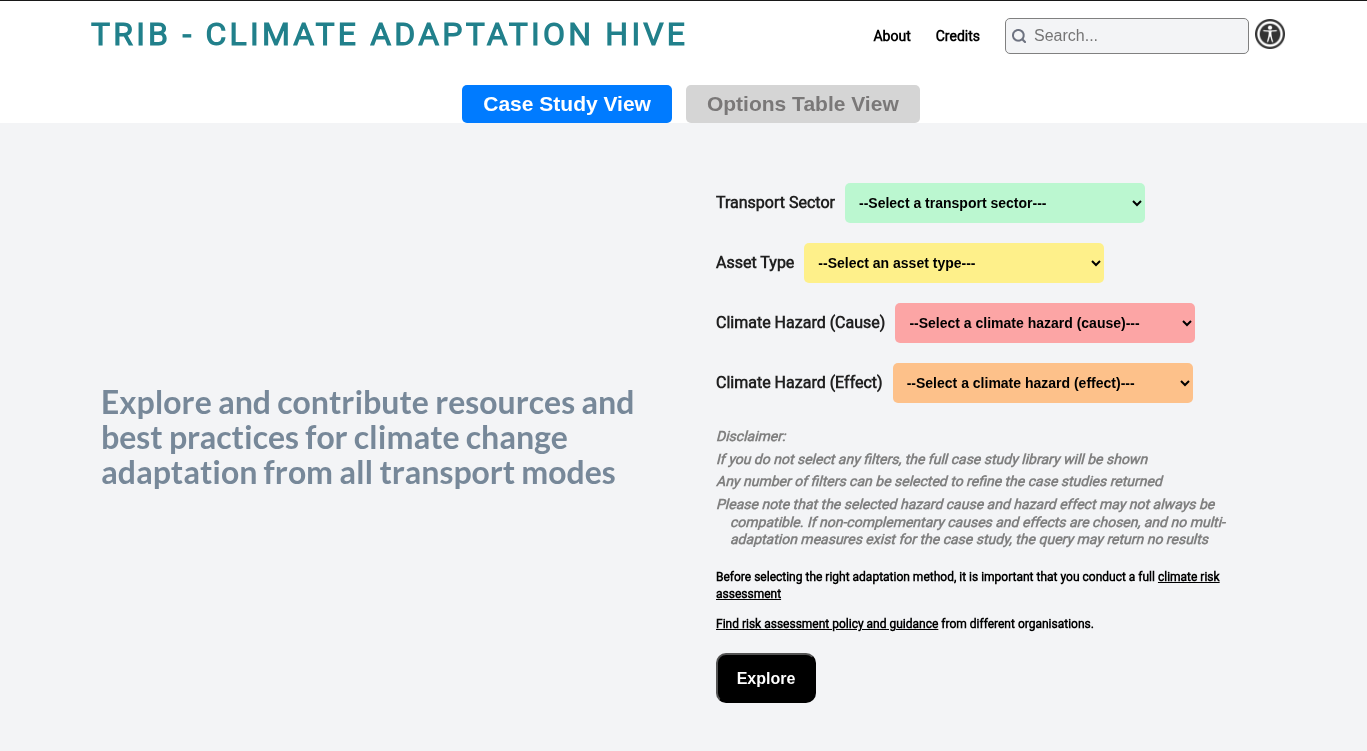
The Climate Adaptation Hive is an online tool designed to support climate adaptation across the transport sector by encouraging a cross-industry approach to sharing best practice. Developed by Connected Places Catapult for the Transport Research & Innovation Board (TRIB), it provides practical, sector-specific value to transport infrastructure professionals working across different modes and stages of the asset lifecycle.
What is the tool for?
The tool contains two parts:
- Case studies – examples of climate change adaptation measures applied to a wide range of transport infrastructure assets. The case studies include examples from both the UK and international and cover financial information, co-benefits and evaluation findings.
- Options table – a comprehensive table outlining climate change hazards, adaptation options and recovery measures for four transport sectors: aviation, maritime, rail and roads. A number of pre-defined asset classes within these sectors has been compiled and can be filtered against
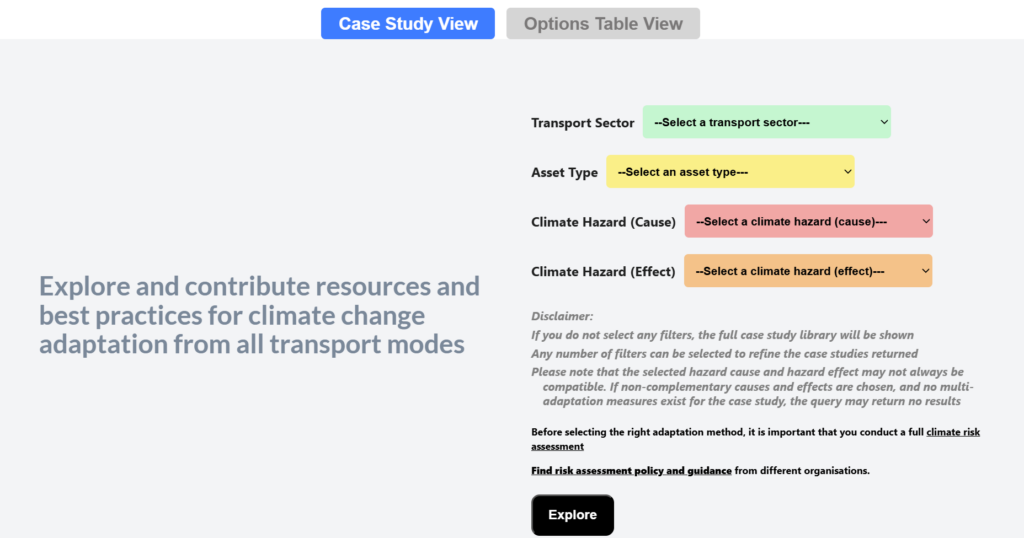
Case study View from the tool
Who is the tool for?
The tool is designed for transport infrastructure professionals working across different modes – aviation, maritime, rail and roads – who are involved in planning, designing, operating or maintaining assets. It is particularly useful for practitioners, policymakers, researchers and organisations seeking to share best practice, compare adaptation options, and improve climate resilience across the transport sector.
Credits
This tool has been developed by Connected Places Catapult for the Transport Research & Innovation Board (TRIB). The Transport Research and Innovation Board brings together representatives from key organisations that fund and carry out research and innovation in the UK, as well as government departments with an interest in transport. We would like to thank the following organisations for their guidance and input, which has been instrumental to the development of the tool to date and its resources:
- Aerospace Technical Institute
- Aerospace Technology Institute
- Association of Directors of Environment, Economy, Planning and Transport
- Department for Transport
- Engineering and Physical Sciences Research Council
- HS2
- Maritime and Coastguard Agency
- National Highways
- Network Rail
- Rail Safety and Standards Board
- Transport for London
- Birmingham University
Further resources

A climate adaptation framework for NHS organisations in England

Climate Adaptation Toolkit – Pembrokeshire

Climate Communications Toolkit

Comments
There is no content