
The Halfway Mark for Adaptation at COP30

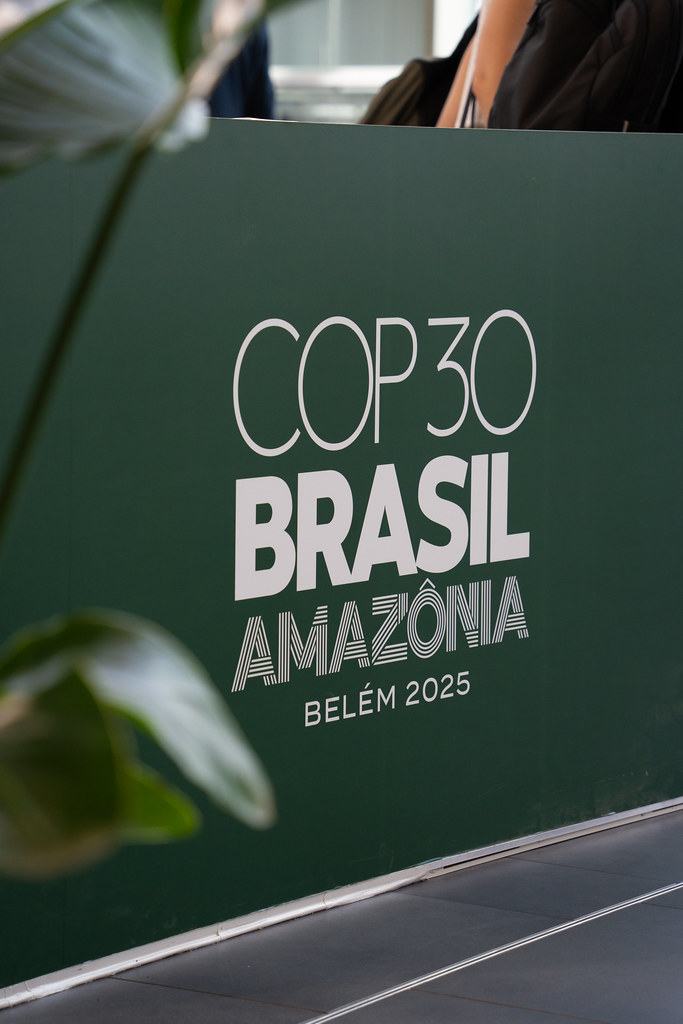
MACC Hub team member Sadhbh Sheeran from the London Ready Partnership provides a reflection from London on the progress of COP30. The views expressed are entirely personal and do not necessarily represent the positions of King’s College London or the London Climate Ready Partnership. Nothing in this reflection should be taken as an official statement or endorsement by these organisations.
Saturday 14 November marked the halfway point of COP30; a moment for negotiators to step out of closed rooms and take stock as the Subsidiary Bodies wrapped up their work. The state of play for adaptation? Rocky at best.
There are three big adaptation issues keeping negotiators busy:
- The ongoing row over Global Goal on Adaptation (GGA) indicators
- Finance gaps with still no clear path to scale up funding
- Texts riddled with options and brackets, highlighting unresolved issues.
For a deeper dive, check out Richard Muyungi’s Q&A on adaptation progress and its importance for Africa, and follow the evolving texts on Carbon Brief’s COP30 tracker.
Adaptation Finance: The Missing Pieces
Brazil’s Presidency billed COP30 as a turning point for adaptation finance. The numbers tell a stark story:
- Since Paris, only 20–25% of climate finance has gone to adaptation annually.
- Glasgow promised to double adaptation finance by 2025, but that hasn’t materialised.
- Adaptation finance hit $32.4 billion in 2022, nearly triple 2016 levels, but fell again in 2023.
- UNEP’s Adaptation Gap Report estimates $310 billion per year will be needed by 2035 for low- and middle-income countries.
Last week, UNFCCC Executive Secretary Simon Stiell stated that climate finance helps turn ambition into implementation, but underscored it is not yet sufficient, reliable enough, and shared widely and fairly enough, especially with regard to adaptation. He urged reducing transaction costs so that finance reaches those who need it most.
A straining finance cycle
Climate finance operates on a model of trust. COPs set collective targets, countries pledge shares, and transparency keeps pressure on. The cycle however is fraying. New commitments are overdue. This NRDC article explains international climate finance goals.
COP26 in Glasgow pushed finance above the $100bn target to $115.9bn in 2022. Most existing pledges expire in 2025-2026, aligning with the NDC cycle and upcoming New Collective Quantified Goal (NCQG). The UK is among other nations including Australia, Canada, France, Germany, and Japan, with expiring pledges. Without renewed commitments, developing nations face a finance vacuum from 2026 onwards. Read about who owes what here.
One option on the table includes tripling adaptation finance between 2025 and 2030. An “informal note” on the GGA includes a section on this new finance goal, it calls for developed countries to increase adaptation finance by “at least” 3x between 2025 and 2030. This call is being led by the African Group, although whether it will transpire in more formal documents is yet to be seen. Analysis by NRDC suggests that tripling finance would mean a steep increase in the growth rate of adaptation finance. This article presents an African perspective on climate finance reform.
Last week, Jim Skea, Chair of the Intergovernmental Panel on Climate Change (IPCC), noted the IPCC’s Seventh Assessment Report will, for the first time, feature a chapter on adaptation finance, including effectiveness and access.
Global Goal on Adaptation: Indicators in the Spotlight
The GGA, which sits under the Paris Agreement, is the first global framework for adaptation and resilience, but don’t be misled by the name. There is no single “goal” rather a set of priority areas and adaptation-related processes, which all focus on increasing adaptive capacity and reducing vulnerability. Find the WRI’s explainer on the Global Goal on Adaptation here.
At COP30, negotiators are under pressure to agree a set of indicators to track progress against the GGA. Why does this matter? Indicators enable global tracking, identify gaps, and inform action. However, the politics are tough and tensions rife:
- Technical readiness vs. political reality: Definitions, metadata, and links to where the finance, capacity-building, and technology transfer would come from remain contentious.
- Ownership gap: Many Parties feel the proposed indicators are top-down and disconnected from national frameworks.
- Equity issues: Developing countries fear prescriptive indicators could be used to justify donors withholding finance.
This blog post describes the political fault lines that lie beneath the surface and have the potential to stall GGA discussions. Without consensus, which is looking increasingly hard to find, the fallback may be a partial decision, adopting a “minimum agreed set” for pilot testing while deferring sensitive issues for a later COP to deal with. While this would keep the process alive, it would risk weakening the momentum.
This week we will see a ministerial consultation convene on the GGA, facilitated by The Gambia and Germany so worth keeping eyes peeled.
National Adaptation Plans (NAPs)
NAPs help countries set medium- and long-term adaptation priorities. Progress remains uneven. COP29 failed to agree the NAP assessment due to disputes over support. Developing countries are demanding predictable public finance while developed countries continue to emphasise the role of the private sector. COP30 aims to break the deadlock and deliver guidance on moving from planning to implementation of NAPs and in doing so mainstreaming adaptation and ensuring reliable finance flows
Broken or Breakthrough
Adaptation is central to COP30’s promise of being an “implementation COP.” But without money on the table, clear indicators, and consensus on NAPs, the risk is real: Belém could be remembered for broken cycles rather than breakthroughs.
Further resources


Comments
There is no contentYou must be logged in to reply.