
Climate Risk Tools Workshop Wales: Summary & Reflections


This is a post-workshop reflection from the MACC Hub Climate Risk Tools Workshop for Wales held virtually on Feb 26 for public sector organisations and individuals. For more details, please contact the author.
On the 26th February, the MACC Hub hosted a half-day online Climate Risk Tools Workshop aimed at public sector organisations and individuals in Wales. The session focused on how to access and use climate risk data and tools to support local risk and adaptation planning.
The workshop was led by Dr Katie Jenkins and Adam Smith from the Tyndall Centre for Climate Change Research and University of East Anglia, and Camilla Curry, MACC Hub Wales Engagement Officer from Severn Estuary Partnership.
The session also included a guest speaker – Rob Bailey, Head of Climate Response (Health) at Welsh Government, who presented Wales’s Adaptation Accelerator Programme. MACC Hub partners from across the UK also supported the session, creating space for discussion, shared learning and networking.
Workshop Purpose
The workshop introduced participants to key climate risk concepts and a range of tools that can support adaptation planning. These included:
- Practical methods to apply available evidence in local adaptation planning
The aim was to provide an accessible introduction to these tools — what they do well, where their limits are, and how they can be used together. The workshop also provided opportunity for attendees to discuss when these tools are most useful in practice.
Colleagues from the Met Office and the University of Exeter whose organisations have developed LACS and LCAT respectively also joined the session to answer questions and add insight.
Setting the Scene for Wales
The workshop opened with an overview of the MACC Hub’s aims and objectives.
Rob Bailey, Head of Climate Response in the Welsh Government, then introduced insights from the Adaptation Accelerator Programme, highlighting the importance of developing the initial stage of a climate change risk assessment. He explained how the programme – specifically aimed at the health sector – supports this work through training, capacity building and developing an NHS-wide adaptation toolkit.
Introducing Climate Risk Concepts & OpenCLIM
Dr Katie Jenkins opened the main section of the workshop by setting the context for why climate risk data is essential in supporting place-based adaptation. She outlined key national and strategic documents in Wales and showed how climate risk tools can help translate these into practical action at a local level.
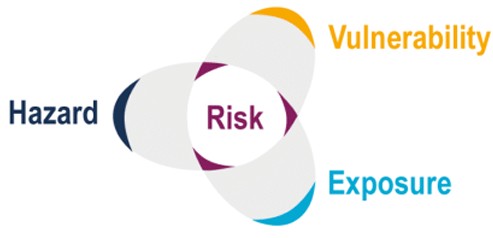
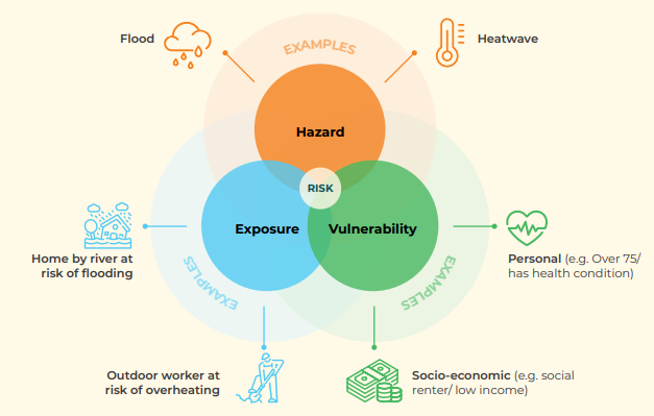
Katie then guided participants through the key concepts of climate risk – hazard, exposure, and vulnerability – and explained how these combine to shape risk in different places. She also highlighted that risks increase with each level of global warming, and that understanding local vulnerabilities requires more than just climate data; it also depends on social and economic factors.
Identifying and Understanding Climate Hazards: Working with LACS
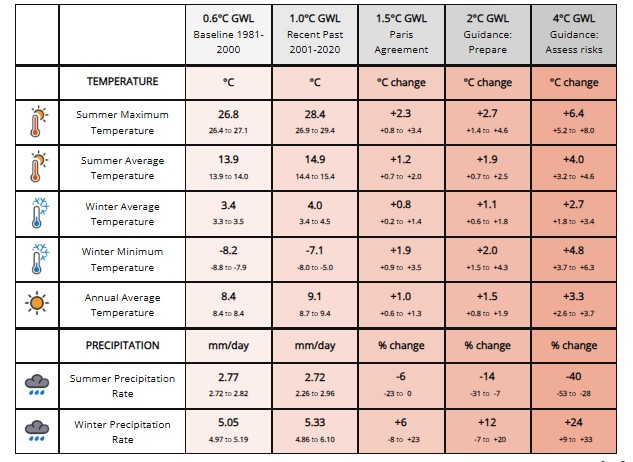
Katie led a session exploring the LACS hazard reports, developed by the Met Office, which provide local data on climate hazards such as temperature, rainfall, sea level rise, and indicators like heatwave or icing days.
Participants were split into breakout groups, and an interactive session was led by facilitators using Miro to review:
- differences between 2°C and 4°C global warming scenarios
- implications for timeframes relevant to their roles
- how model uncertainty is communicated
Groups reflected on which indicators matter most for their work and what additional data they would need to carry out a climate change risk assessment.
Identifying Impacts and Vulnerabilities: Working with OpenCLIM Risk Reports
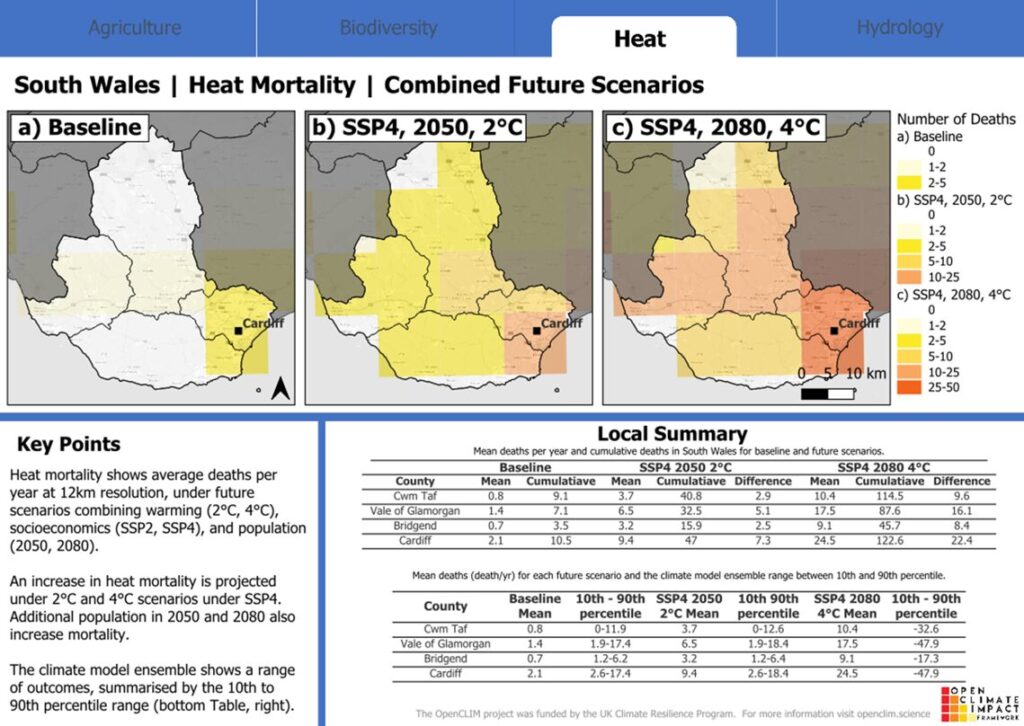
In the next section, Adam introduced the OpenCLIM risk reports, which combine climate projections with socioeconomic data to give a fuller picture of risk across different areas.
These reports look at:
- Change to climate hazards using UK Climate Projections 2018 (UKCP18)
- Change to exposure and vulnerability using socio-economic data (Shared Socioeconomic Pathways)
to understand the risk of the following impacts:
- Heat mortality projections
- Drought months per catchment
- Flood likelihood changes
- Biodiversity habitat suitability
- Changes to agricultural potential yield
In breakout groups, participants were then given the opportunity to compare projected risks for climate impacts under 2°C vs 4°C warming and across socioeconomic scenarios, linking these results to their own organisational priorities.
Risk reports for regions across the UK can be found on the Tyndall Centre for Climate Change Research website. It is worth noting the Tyndall Centre are currently updating the boundaries for risk reports in Wales.
Further information about the OpenCLIM risk reports can be found in the OpenCLIM user guide.
Planning For and Adapting to Climate Change: Using LCAT
The final session introduced LCAT, an online tool developed by the University of Exeter supporting the selection of adaptation options guided by risk, vulnerability, and sector-specific needs.
Participants explored:
- Vulnerability profiles
- Adaptation actions for temperature or flooding
- Actions’ alignment with reducing hazard vs vulnerability
- The equity implications of various interventions
This exercise helped attendees visualise which adaptations are most relevant for their sectors and communities, and how to begin making informed decisions.
Insights and Reflections
Key insights from the workshop included:
- Place matters: Local data and context are essential, national datasets alone cannot lead to effective place-based planning.
- There is no perfect answer: No climate risk tool provides a complete assessment on its own. Each has its own strengths and limitations and works best when used alongside others. Tools such as LACS, OpenCLIM and LCAT are most effective when used together to build an initial understanding of local climate risks.
- Community and stakeholder engagement is key: Findings from climate tools need to be backed up by community and stakeholder engagement to help verify results and increase accuracy.
- Equity matters: Including social and economic factors supports fairer decision-making.
- Data needs careful interpretation: Misunderstanding data can lead to poor or unjust outcomes.
- Integration of tools strengthens decision making: Climate tools have strengths and weaknesses, and some are better applied in some instances rather than others. Using tools together (e.g. LACS + OpenCLIM + LCAT) provides a more complete picture for risk-informed planning.
Participant Feedback
“Never used such tools before. Now that I know they exist, I think they are really useful and can help to support conversation on both mitigation and adaptation actions. The tools can support the need for actions at both local and national level.”
“It is good to know what online tools are available and have the opportunity to feedback. Trying tools together made me aware where I need to be aware of how to understand data and evidence and when to question them as they don’t always make sense.”
Next Steps and Additional Resources
The workshop focused on how different climate risk tools can be used together to support climate risk assessments and strategic planning. Adam and Katie also highlighted that these tools are just one part of the process, and shared some of the wider resources available across Wales and the UK. A selection of these resources is included below.
A huge thank you to the speakers and attendees for engaging and participating in the workshop and to Adam, Katie and MACC Hub facilitators for leading a comprehensive climate risk tools workshop.
As climate risks continue to grow, workshops like this help organisations build the knowledge and confidence needed to turn data into meaningful action.
Further resources

Local Authority Climate Service (LACS)

Updated Local Authority Climate Service (LACS)
Local Climate Adaptation Tool (LCAT)


Comments
There is no contentYou must be logged in to reply.