
Surface water flooding in London: new insights from The Developer

This blog post is based on reporting by Peter Apps for The Developer, “When London floods: ‘If you have vulnerable people living in basement flats, there’s a huge risk.’” (17 December 2025). All information below is drawn from that article. Blog content is provided for general information purposes only and should not be taken as professional or legal advice. While we aim to ensure accuracy, we make no representations or warranties regarding the completeness, reliability or suitability of the information presented.
Introduction
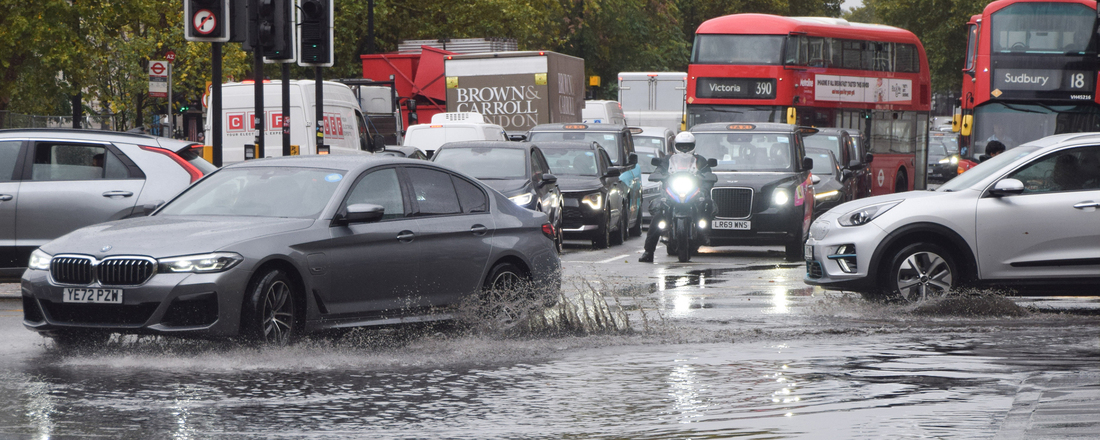
London faces a growing threat from surface water flooding — flash floods caused when intense rainfall overwhelms the city’s drainage systems. These events are fast, unpredictable and pose serious risks to life and property, especially for residents in basement flats.
No comprehensive database exists showing exactly how many basement flats are in London or where they are located, and there is currently no active alert system such as mobile warnings targeted at these high‑risk properties.
What happened in July 2021
In July 2021, parts of London experienced intense rainfall — far above what had been forecast — resulting in overwhelmed sewers and flooding in more than 1,000 properties. Surface water flooding is now listed as the top flooding risk on the London Risk Register, both likely and severely impactful.
Experts point to a combination of factors that make London vulnerable:
- A sewer system built in the Victorian era that cannot cope with rapid, intense rainfall;
- Increasingly impermeable surfaces across the city that prevent absorption of rainwater;
- More extreme rainfall events driven by climate change.
“Surface water flooding is more difficult to manage than river flooding, because it can happen almost anywhere,” says Kristen Guida, Head of Strategy, Prevention and Community Resilience at London Resilience. The Developer
One of the most serious concerns is the life safety risk in basement properties. MACC Hub member and climate adaptation researcher Dr Raghav Pant (Senior Research Associate, Environmental Change Institute, University of Oxford) emphasises this danger:
“Especially if you have vulnerable people living in basement flats, there’s a huge risk that there could be loss of life.” The Developer
Flooding in these properties can be fast and difficult to escape from — especially without multiple exits or active alert systems. This risk is compounded by social vulnerabilities: many basement flats are rented, unregulated and occupied by people with limited options for alternative accommodation.
Flood mitigation measures like flood doors may protect interiors, but they can impede escape, pointing to a need for reconsideration of both safety standards and emergency communications.
Growing risks and adaptation responses
Surface water flooding is not just about infrastructure; it’s about how the city adapts to climate risks. London is highly exposed: one in eight homes is in a high‑risk zone for this type of flooding, accounting for around 30 % of the UK’s total homes at high risk. The Developer
Efforts such as Flood Ready London are trying to coordinate responses across boroughs and agencies, using sustainable urban drainage systems like rain gardens, permeable surfaces and catchment‑based planning to slow and absorb water before it inundates urban areas.
Community‑led action is also emerging. In areas repeatedly hit by floods, residents are organising Flood Action Groups, implementing local resilience measures, and working with authorities to build solutions that both protect neighbourhoods and increase wider awareness.
What this means for adaptation
As climate change intensifies, the frequency and severity of extreme rainfall events is projected to increase. MACC Hub research models show a high likelihood of increased flooding risk and exposure in future decades, reinforcing the need for adaptive strategies that address both physical infrastructure and social vulnerability.
The reality of climate change, though, means that this is all a question of when, not if, these risks materialise. Part of Pant’s work, carried out through the Hub, involves projecting future flooding risks based on climate and population estimates:
“Given that there’s a lot of uncertainty in predicting future climate outcomes, we are not saying that the numbers that we come up with are definite,” Pant says. “But of course, the trends show that there is a very high likelihood of increased risk of flooding in the future, and there’s an increased risk of people being exposed and vulnerable to that flooding.”
“The question is how well prepared we are when it [flooding] does happen, and how many lives that preparation saves,” says flooding consultant Kerry Halfpenny. The Developer
Citation
This blog post is based entirely on reporting by Peter Apps for The Developer: “When London floods: ‘If you have vulnerable people living in basement flats, there’s a huge risk’”. All rights to the original reporting remain with The Developer and Peter Apps.
Further resources


A vision for a Flood-Resilient City: the London surface water strategy

Climate interdependency risks for London’s transport sector: A systems approach to resilience

Comments
There is no content