MACC PROJECT: WM-ADAPT


Summary
Climate change is already affecting the West Midlands, where urban areas remain poorly adapted. During the July 2022 heatwave, temperatures exceeded 38°C, causing overheating in homes and care facilities, school closures, travel disruption, data server failures, and increased emergency incidents. Regular flash flooding from heavy rainfall leads to road closures, property damage, sewage overflow, and event cancellations. As extreme weather intensifies, health and socio-economic impacts will escalate. Without adaptation, climate change is projected to reduce the West Midlands Combined Authority’s (WMCA) GVA by £350–£638m by 2030 and up to £2.9bn by 2050.
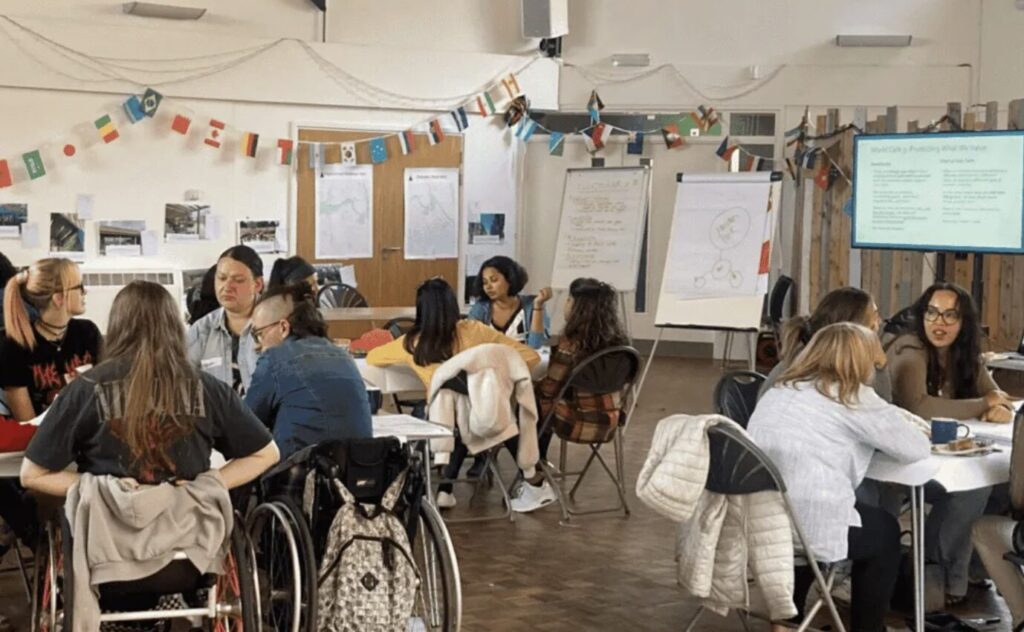
Building on previous work co-developing Climate Risk and Vulnerability Assessments (CRVAs) for Birmingham and the wider region, the WM-Adapt project will advance adaptive capacity across the West Midlands. It will integrate existing CRVA expertise with new action research aligned to WMCA’s 2024 Adaptation Plan. The project will gather regional community perspectives on adaptation, identifying barriers and opportunities to inform improved decision-making. It will also pioneer community-scale adaptation pathways, develop a regional route map for building adaptive capacity, and establish a Regional Adaptation Network to support knowledge exchange and problem-solving. Additionally, WM-Adapt will enhance CRVA capabilities, including improved overheating and flooding analysis, new health and economic impact layers, and future climate projections, while collaborating nationally through the MACC Hub.
Project details
Objectives
The key objectives of WM-Adapt are to:
- Obtain a regional understanding of community perspectives of climate adaptation
- Co-create and pilot community-scale, place-based adaptation pathways
- Co-create a route map for building regional adaptive capacity through the establishment of a Regional Adaptation Network (RAN)
- Develop new capabilities for the West Midlands Climate Risk and Vulnerability (CRVA) mapping tools – improved understanding of overheating risks, health and economic impacts and future climate projections
- Local authorities within the WMCA area
Workstreams
This project involves 3 workstreams:
- Community, place-based adaptation pathways
- Climate risk and impact data enhancements
- Building regional adaptive capacity
Climate vulnerability and social-spatial inequalities will be the key focus for participatory action research on this urgent issue, and the team will be working with local authorities, Birmingham Voluntary Services Council Research, Climate Sense and others to strengthen community action and adaptation.
Project team
University of Birmingham: Emma Ferranti, Andrew Quinn, Sarah Greenham, Xilin Xia, Qian Li, Yanzhi Lu, Harry Kirby (School of Engineering); Jessica Pykett, Hali Healey (School of Geography Earth & Environmental Sciences, Centre for Urban Wellbeing); Suzanne Bartington, Shi Chang, James Hall, James Hodgson (Applied Health); Jian Zhong (University of Greenwich); Jacqueline Homan, Richard Rees, and Bethany Haskins-Vaheesan (WMCA); Jenny Stocker (Cambridge Environmental Research Consultants); Nick Pyatt (Climate Sense); Marianne Walker, Suzannah Wilson, Sophie Wilson, Elizabeth Goodchild (Birmingham Voluntary Service Council).
Contact
For more details, get in touch with Emma Ferranti – https://www.birmingham.ac.uk/staff/profiles/civil/ferranti-emma
Comments
There is no contentYou must be logged in to reply.